Composite Bonding in Edinburgh
No drilling, no injections in most cases, no lengthy treatment plan. Composite bonding is one of the most straightforward cosmetic treatments in dentistry and the results are immediate.
OVERVIEW
Citrus Dental Care provides composite bonding at 1 Meadow Place, Edinburgh EH9 1JZ, near The Meadows. Composite bonding uses tooth-coloured resin applied directly to the tooth surface to repair chips, close gaps, reshape uneven teeth, and improve the overall appearance of the smile. Treatment is minimally invasive, requires no drilling in most cases, and is typically completed in a single appointment. Composite bonding is a private treatment
So, What Is Composite Bonding, and Why Are So Many People Getting It?
You’ve been on Bruntsfield Place a hundred times, standing at a café window catching your reflection mid-smile, noticing the small chip on the corner of your front tooth that you’ve learned to half-hide. Or the slight gap that closes when you press your teeth together but opens again when you smile properly. Small things. The kind that don’t feel worth major dental work but still catch your attention in every photograph.
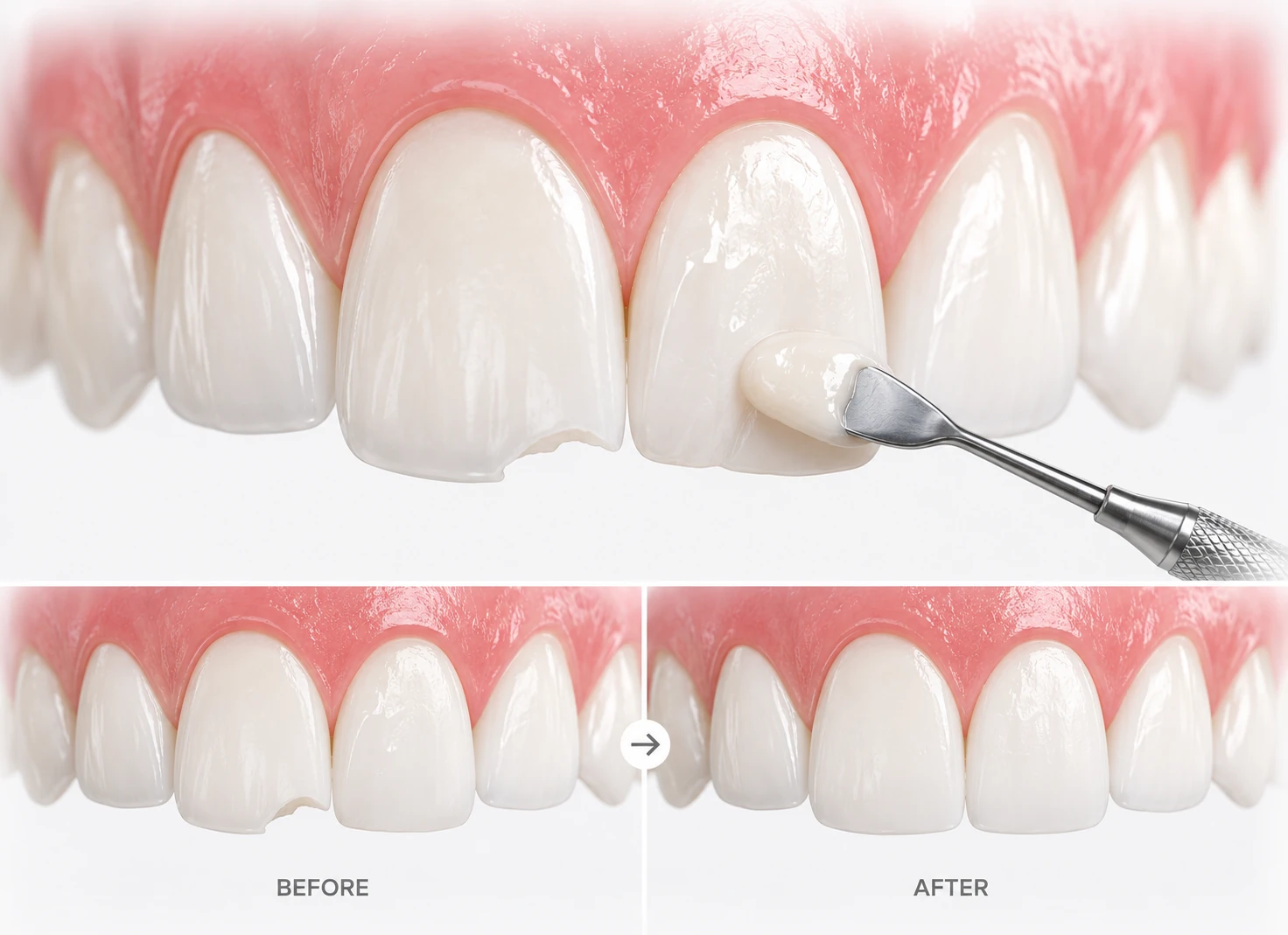
Composite bonding is built for exactly those situations. It is a cosmetic dental procedure in which tooth-coloured composite resin is applied directly to the surface of a tooth, sculpted by hand to the correct shape, and hardened with a curing light. The result is a repaired, reshaped, or evened-out tooth that blends seamlessly with the surrounding teeth. There is no drilling in most cases, no anaesthetic required for straightforward work, and the treatment is typically completed in a single appointment. The results are visible the moment you leave the chair.
Is Composite Bonding Right for Me?
Composite bonding works particularly well for chipped or cracked front teeth, small gaps between teeth, teeth that are slightly too short or uneven in length, minor discolouration that doesn’t respond fully to whitening, and mild asymmetry that affects the overall appearance of the smile.
It is less suited to significant crowding or misalignment, where Invisalign is a more appropriate solution, or to very large restorations, where a crown or veneer provides more durability. Your dentist will be straightforward about whether bonding is the right treatment for what you want to achieve, and if a different approach would serve you better, you’ll hear that at the consultation.
If you’re planning to whiten your teeth as well, whitening should always be done first. Composite resin is colour-matched to your existing tooth shade and cannot be whitened after it’s placed, so getting your teeth to the shade you want before the bonding is applied ensures everything matches.
What Does the Process Look Like?
Your Composite Bonding at Citrus covers more ground than you might expect.
-
1ConsultationYour dentist examines your teeth, discusses what you'd like to change, and confirms whether composite bonding is the right approach. Photos may be taken as a reference point.
-
2Shade matchingThe composite resin is carefully matched to the colour of your surrounding teeth, or to a whitened shade if you have recently completed whitening treatment.
-
3Surface preparationThe tooth surface is lightly etched and a bonding agent is applied. This creates a strong bond between the tooth and the resin without drilling.
-
4Application and sculptingThe composite is applied in layers and shaped by hand by the dentist to achieve the correct form.
-
5CuringEach layer is hardened using a curing light, locking the shape in place.
-
6FinishingThe bonded tooth is refined, smoothed, and polished until it sits naturally alongside the surrounding teeth and feels comfortable when you bite.
The whole process for a single tooth typically takes 30 to 60 minutes. Multiple teeth can often be completed in the same appointment.
How Much Does Composite Bonding Cost in Edinburgh?
Composite Bonding Fees
Composite bonding is priced per tooth, and the cost varies depending on the extent of the work involved for each tooth. Edinburgh practices typically charge in the region of £150 to £350 per tooth for composite bonding treatment.
We don’t have a standard published price for composite bonding because the range of work that falls under this treatment varies significantly, from a small chip repair to a full smile makeover involving multiple teeth. The best way to get an accurate figure is to come in for a consultation, where we’ll assess your teeth, talk through what you want to achieve, and give you a clear written quote before any treatment is agreed.
Book a free consultation on 0131 285 3308 and we’ll give you an honest assessment and a clear price.
Composite bonding is a private treatment. It is not available on the NHS.
We See Patients From Across Edinburgh and Beyond
We see composite bonding patients from across the Southside and central Edinburgh including Newington, Bruntsfield, Tollcross, Marchmont, Morningside, and Leith. If you’ve been thinking about composite bonding for a while and you’re ready to find out exactly what’s involved and what it would cost for your teeth specifically, come and see us on Meadow Place.
Not sure where to begin? Just give us a ring.
Make an Enquiry
Why Edinburgh Patients Choose Citrus
For patients having bonding across multiple teeth, or combining bonding with whitening or other cosmetic treatment, Tabeo finance lets you spread the cost into fixed monthly payments with no interest and no early repayment penalty.
We’ll confirm your total cost at the consultation and can then walk you through what a monthly finance plan would look like before you commit to anything.
REGISTRATION
Register With Citrus Dental Care
New to the area, returning after a while away, or just finally getting round to that appointment you’ve been putting off. You’re welcome here and registering is straightforward.
Here’s what you get when you join us:
- Free NHS check-ups for all registered patients
- Same-day emergency appointments when you need them
- A friendly, consistent team who gets to know you
- Membership plans from £22.50 a month
- Spread the cost of private treatment with Tabeo
- Gentle, unhurried care at whatever pace suits you
NHS patients are very welcome. We’re currently accepting new NHS registrations alongside private patients, which we know isn’t something every Edinburgh practice can say right now.
FAQs
Frequently Asked Questions About Composite Bonding
In most cases, no. Composite bonding is one of the most minimally invasive cosmetic treatments available. The tooth surface is lightly etched with a mild acid to help the resin adhere, but this does not require drilling or anaesthetic for straightforward cases. If bonding is being used to repair deeper damage or decay, anaesthetic may be needed, and your dentist will tell you clearly before starting.
With proper care, composite bonding typically lasts five to seven years before it needs replacing or touching up. Longevity depends on how many teeth were treated, where in the mouth they sit (front teeth last longer than back teeth under chewing forces), and lifestyle factors including oral hygiene, diet, and whether you grind your teeth. Avoiding nail-biting, pen-chewing, and biting directly into hard foods protects the bonding considerably.
Yes, for small to moderate gaps. Composite is applied to the sides of the teeth to effectively close the gap. For larger gaps, or where the spacing is caused by the position of the teeth rather than their shape, Invisalign would be a more appropriate long-term solution. Your dentist will advise which approach is right for your specific situation at the consultation.
Composite bonding is applied directly to the tooth surface without removing any enamel, making it reversible. Veneers are thin shells, usually porcelain, that are bonded to the front of the tooth after a small amount of enamel is removed, making them a permanent change. Composite is less expensive and faster to place, veneers last longer and are more stain-resistant. Both can produce excellent cosmetic results. Your dentist will discuss which is more appropriate for what you want to achieve.
Before, always. Composite resin is colour-matched to your existing tooth shade and does not respond to whitening gel after it has been placed. If you whiten after bonding, your natural teeth will lighten while the composite stays the same colour. Complete your whitening course first, allow two weeks for the shade to stabilise, then have the bonding applied to match the new brighter colour.
Composite resin fillings are available on the NHS for clinical restorations. Cosmetic composite bonding to improve the appearance of otherwise healthy teeth is a private treatment and is not covered by the NHS.